



The Leeds Philosophical
REPORT OF THE COUNCIL FOR THE ONE HUNDRED AND EIGHTY-FIFTH SESSION, 2004 - 2005
The
Council presents its report and financial statements for the year ended 30
September 2005. The financial
statements comply with current statutory requirements and with the
requirements of the Society's memorandum and articles.
The
Society is a registered charity, registration number 224084, and is a company
limited by guarantee, company number 177204. It is governed by its memorandum
and articles of association adopted 2 July 1997, which replaced the memorandum
and articles of 1921. The Society’s registered address is The
City Museum, c/o The Town Hall, Leeds LS1 3AD.
The
members of the Council are considered to be both directors for Companies Act
purposes and trustees for Charities Act purposes. One third of the members of
Council retire by rotation at each Annual General Meeting (normally held in
December), when appointments or reappointments are made. Of the Council
members who retired at the AGM held on 9 December 2004, Dr Wyatt did not seek
re-election and Ms Douglas, Mr Hirschmann and Professor Seaward were
reappointed; the nominations of Dr Matthew Dagg, who had served as a co-opted
Member since March 2004, and Ms Susan Wrathmell were approved. The
officers of the Society are elected by and from the members of Council at the
first meeting of Council following the Annual General Meeting. Council met on
six occasions during 2004-2005. Parts
of its business were delegated to the following committees: Grants, Events and
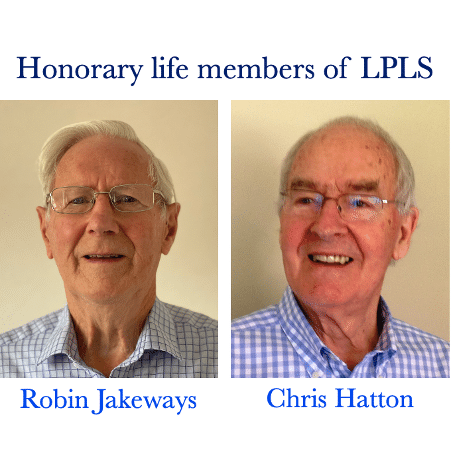
Publications, chaired by Drs Hatton, Jakeways and Pickering respectively.
ADMINISTRATION
OF THE SOCIETY
The
officers of the Society listed on page 2 were elected at the Council meeting
held in January 2005. Mr Norman
Madill continued his valuable work as Assistant Secretary, efficiently
managing the Society’s links with its members, the sale of its publications,
and other necessary administrative matters.
STATEMENT OF COUNCIL
MEMBERS' RESPONSIBILITIES
Company
law requires the Council members to prepare financial statements for each
financial year which give a true and fair view of the state of affairs of the
Company and of the incoming resources and application of the resources of the
Company for that period. In preparing those financial statements, the Council
members are required to:
·
Select suitable
accounting policies and then apply them consistently
·
Make judgements
and estimates that are reasonable and prudent
·
Follow
applicable accounting standards and the Charities SORP, disclosing and
explaining any departures in the accounts
·
Prepare the
financial statements on a going-concern basis unless it is inappropriate to
presume that the Company will continue its activities.
Council
members are responsible for keeping proper accounting records which disclose
with reasonable accuracy the financial position of the Company at any time and
to enable them to ensure that the financial statements comply with the
Companies Act 1985. They are also responsible for safeguarding the assets of
the Company, ensuring their proper application in accordance with charity law
and hence for taking reasonable steps for the prevention and detection of
fraud and other irregularities.
THE
SOCIETY'S OBJECTS AND POLICIES
General
The
Society is an educational charity, whose principal objects are ‘To promote
the advancement of science, literature and the arts in the city of Leeds and
elsewhere, and to hold, give or provide for meetings, lectures, classes, and
entertainments of a scientific, literary, or artistic nature’. In
furtherance of these objects the Council’s policy has been to disburse its
income as follows by:
·
providing small
grants for purposes of research, publication, or artistic performance
·
awarding prizes
·
financing the
publication of research papers and monographs
·
providing a
programme of public lectures relevant to the Society’s objects
·
supporting the
work of Leeds City Museums & Galleries
·
supporting other
activities in Leeds of a scientific, literary or artistic nature.
The Trustees’ policies on
investments, reserves, grants and risk management are set out below.
Reserves policy
The
Society holds reserves in the form of an unrestricted fund derived from past
benefactions and its annual subscriptions, including the proceeds from the
sale of the Philosophical Hall to Leeds City Council in 1921.
The fund has increased in value over the years as income exceeded
expenditure and now stands at £413,478. Since the Society adopted its new
constitution in 1997, Council's aim in the medium term has been to
balance its expenditure and income without depleting the capital value of its
investments. The Society’s income and expenditure do, however, vary from
year to year depending on a number of factors.
The Council therefore considers it prudent to hold liquid reserves in
the Charities Deposit Fund and current bank account.
The amount held in liquid reserves is a minimum of £5,000 (roughly 25%
of current average annual expenditure). This
sum may be supplemented from time to time by provision for major expenditure
to which the Council is committed in the coming year (and for which the
anticipated income in that year will not be sufficient), or for major
expenditure the possibility of which it foresees over the coming five-year
period. The policy on reserves is
reviewed annually by the Council as part of its annual budget review.
Investment policy
There are no restrictions in the Society’s Memorandum
and Articles. The Council’s
investment objectives are to maintain a level of income sufficient to fund the
Society’s activities, while increasing the capital value of its invested
assets over the long term at least in line with inflation. To this end, it is
the Society’s normal practice to reinvest realised gains on its assets. The
Council has delegated the management of its investments on a discretionary
basis to Carr Sheppards Crosthwaite Ltd (now Rensburg Sheppards). Over the year 2004 – 2005, the market value of the investments increased by 10.4% and from 1995 to
2005 by 50.9%.
Risk management
1)
Income: since the largest element of the Society’s income is from its
investments, the major risks to which it is exposed are falls in dividend
income and in the capital value of its investments. These risks are lessened
by a wide spread of equity investments across several sectors and in a number
of companies within each sector. A high proportion of the Society’s capital
is currently held in fixed interest securities as a means of protecting income
levels. The investment managers pursue an active investment policy on the
Society’s behalf which further mitigates the risks. The Council is confident
that over the long term any temporary fall in the overall value of its
investments will be recouped. The arrangements are regularly reviewed by the
Trustees.
2)
Expenditure: expenditure on individual Grants, Publications and Events
represents a small part of total expenditure and risks are minimised by
standard procedures for authorisation of all financial transactions. The
potential risks at the Society’s events are considered as part of the
planning for them, and appropriate steps are taken, including the arrangement
of Public Liability insurance as necessary.
3)
The quality of the Society’s Events and Publications and the outcome
of Grants that have been awarded are reviewed by the Trustees at their regular
meetings so as to ensure that all the Society’s activities are of a high
standard consonant with its Objects.
Grant-making policy
In making grants to promote the advancement of the
Society’s objectives, the Council places particular emphasis on (but does
not limit its grants to) support for organisations and citizens of Leeds
engaged in cultural, academic and scholarly activities, especially those
relating to Leeds and its immediate area.
It does not normally give grants towards the general support of
students on taught courses or for research students to attend conferences. The
maximum value of grants is normally £2,000, with the majority being in the
region of £1,000. The Council is
keen to support new endeavours by the award of ‘pump-priming’ grants.
THE SOCIETY’S ACTIVITIES
During the 2004-2005 session the Society continued its
recent successes in fulfilling its objects as listed above, including a
growing number of artistic and scientific events for members and non-members
as detailed below. During the year the Society lost 27 members through
resignation and death and welcomed 23 new members, so that at the end of
September 2005 the total number stood at 132. We urge members to make an
effort to bring the Society and its activities to the attention of potentially
interested friends and colleagues.
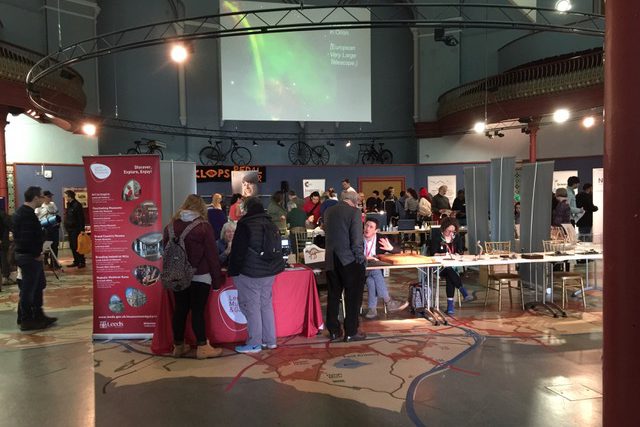
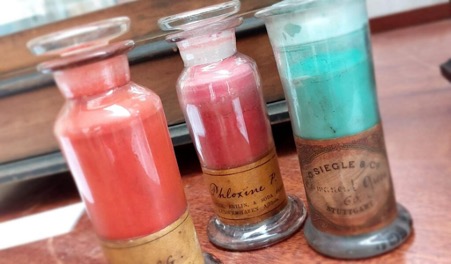
Numerous successful events were held during the year varying from lectures to visits. The aim was to have at least one event each month so that the Society would have a good programme of activities. In October Dr Ian Holme treated us to a private visit to the Colour Museum in Bradford. The Annual Priestley Lecture in Mill Hill Chapel followed later in the month and a few days after this there was “An Evening with Jim Walsh” in University House. On 4 November, the perennial and very popular Pre-bonfire-night Spectacular was delivered by Mike Hoyland with his usual aplomb and exciting demonstrations. At the AGM in December, Dr Stephen Muir gave an excellent after-dinner talk on “Yorkshire Composers”. In January, Margaret Ratcliffe gave us an interesting talk entitled “Arthur Ransome of Leeds – the JK Rowling of his day”. This was followed in the next month by an entertaining talk by Dr Tristram Wyatt on “Following Your Nose to Love, Do Humans have Pheromones?” and a public lecture on “The Sumatran Earthquake” in memory of Prof. Sally Macgill, the latter sponsored by the Society and School of Earth Sciences. In March, Cecil Bloom talked to us about “Elgar and the Leeds Connection” and later in that month the Science Fair was held in a new venue – The Light, in Leeds City Centre. The Society is most grateful to the management of The Light for allowing us to hold the event there on a busy Saturday. The Fair was very successful and attracted a much greater number of visitors than in the past when it had been held in the University. In April, we were given an excellent talk on the “Restoration of the Grand Theatre” by Robert Thorne. Prof. David Morley spoke to us in May on the subject “Fifty Years of Child Healthcare in the Tropics”. This was followed in June by a “Leeds Walk” when Janet Douglas conducted a party around the historic buildings to be found in the vicinity of Marshall Street. A visit to Hull in August started with a tour of the Hull Museum conducted by Bryan Sitch; in the afternoon, most members then went on to visit Burton Constable. In September, Prof. Tom McLeish intrigued members with a talk entitled “The Physics of Slime and Spherical Cows”.
Grants
Following
further publicity, the number and quality of applications for grants have
continued to improve this year. During
the year the following grants (ranging from £80 to £2000) were awarded by
the Society to two individuals (Peter Dawson and Jessica Bachicha) and to
organisations in support of:
·
Promoting ‘Leeds
Lieder+’ music festival
·
Guide to VITRINE
– contemporary art displays throughout Leeds City Centre
·
Publication costs of The
West Yorkshire Plant Atlas
·
Purchase of GPS for a milestone survey
on behalf of the Milestone Society
·
Leeds International Medieval
Conference
·
Subscription to the 250th anniversary
facsimile of Thomas Chippendale’s Gentleman and Cabinet-Maker’s Director
·
Leeds University Liturgical Choir
visit to Poland
·
Yorkshire
Geology Week
·
Chapel Allerton Arts Festival
·
Royal Armouries’ Shogun
Exhibition education pack
·
‘Arts to Share’ project for the visually impaired
·
Exhibition costs for the 175th
anniversary of the Leeds School of Medicine
·
Ilkley Literary Festival
·
ULITA exhibition ‘Patterns
of Culture-Techniques of Decorative Weaving’
·
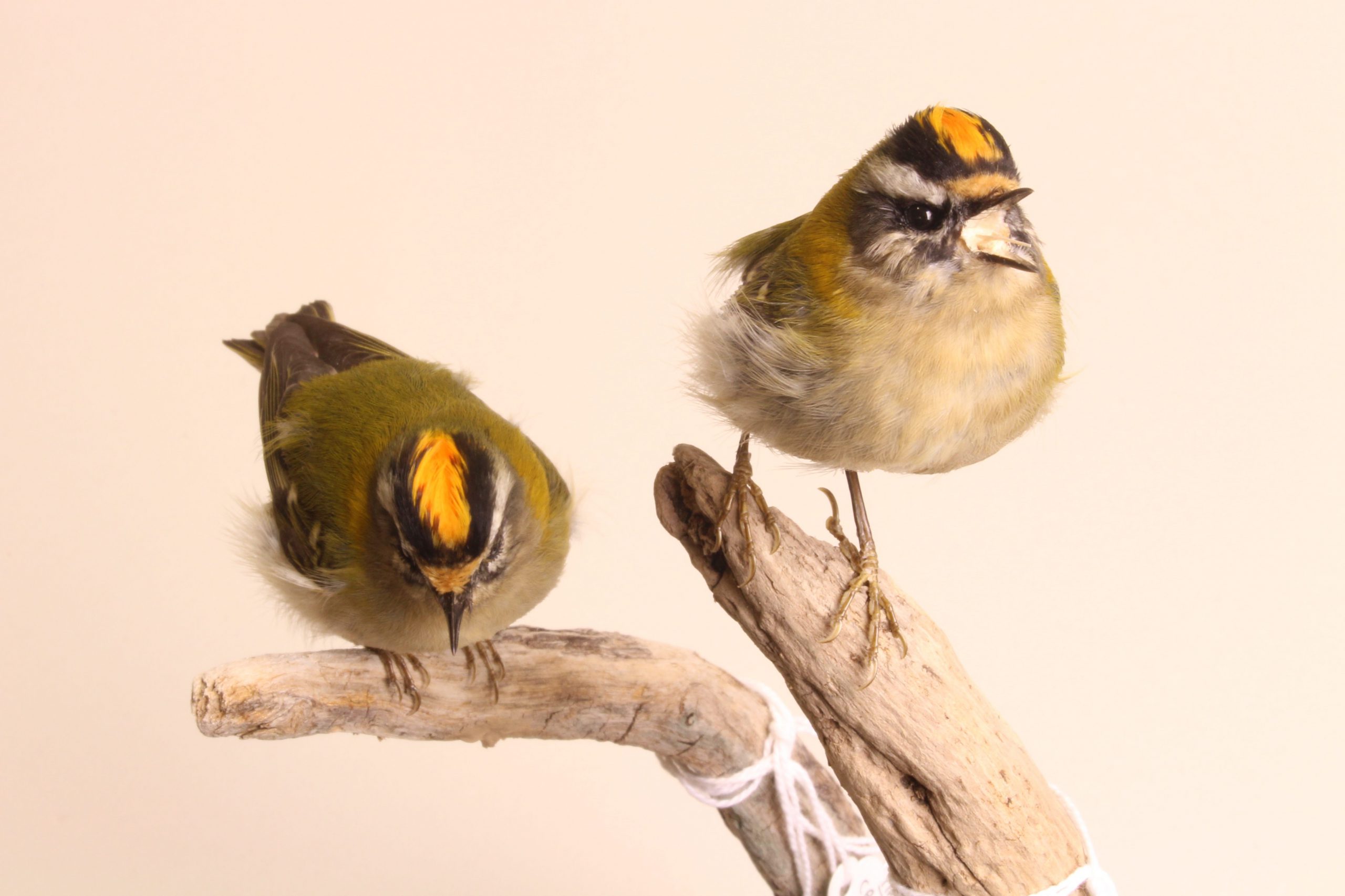
Conservation costs of a collection of
rare parrots for Leeds Museums
·
Joseph Priestley Bicentenary
celebrations
·
Performance costs of the viol consort Fretwork
·
Leeds Peace Poetry Competition
·
Leeds
Astromeet 2005
·
Performance costs of London
Sinfonietta at ‘fuseleeds06’
·
Royal Armouries’ education outreach
programme
·
Leeds Museums’ purchase of historic
photographs by J. W. Oxley
·
Publication of J. R. Mortimer’s
archaeological investigations
·
A film commission by Ken Jacobs: Leeds
Bridge 1888
·
Restoration of Dr Arthur Chadwick’s
flying dinosaur models
Publications
The innovation in this area
during 2004-05 was the first issue of what is intended to be a continuing
series, namely the new Leeds Philosophical and Literary Society Annual
Report and Review. This incorporates the traditional Annual Report, but
expands it through the addition of numerous short reports of Society events
– some of them illustrated – and of the results of grants awarded by the
Society. The authors are a mixture of members of Council, speakers at events,
and grant recipients, and the Society is grateful to them all for their
cooperation – and particularly to Dr Chris Hammond, who edited the first
issue and saw it through to printing. The Annual Report and Review was,
of course, distributed to members of the Society, but has also proved useful
for promotional purposes.
The Society did not publish anything else on its account during 2004-05, in effect consolidating Council’s earlier decision to channel funds that might once have been used for its own publications into support for publications by other bodies, when appropriate. Items falling into this category that were distributed to members in 2004-05 comprised Geology, Scenery and History: A Walk In Yewdale, Northeast of Coniston, by Murray Mitchell (Cumbria RIGS); Edwardian Leeds in Postcards, by Kevin Grady and John Stringer (Leeds Civic Trust); and two issues of the poetry magazine Pennine Platform, edited by Nicholas Bielby. Members can, however, look forward, in 2006 to an updated second edition of The Building Stone Heritage of Leeds, by Murray Mitchell, first published by the Society (by the late Francis G. Dimes and Murray Mitchell) in 1996.
Leeds
Museums
The
Society continues its active involvement (together with three other local
societies, the Friends of the Leeds Museums, the Thoresby Society, and the
Leeds Civic Trust) in the planning and the development of the Leeds Institute
building as the Leeds City Museum, and the preservation and conservation of
our national heritage in auxiliary archives and resource centre.